

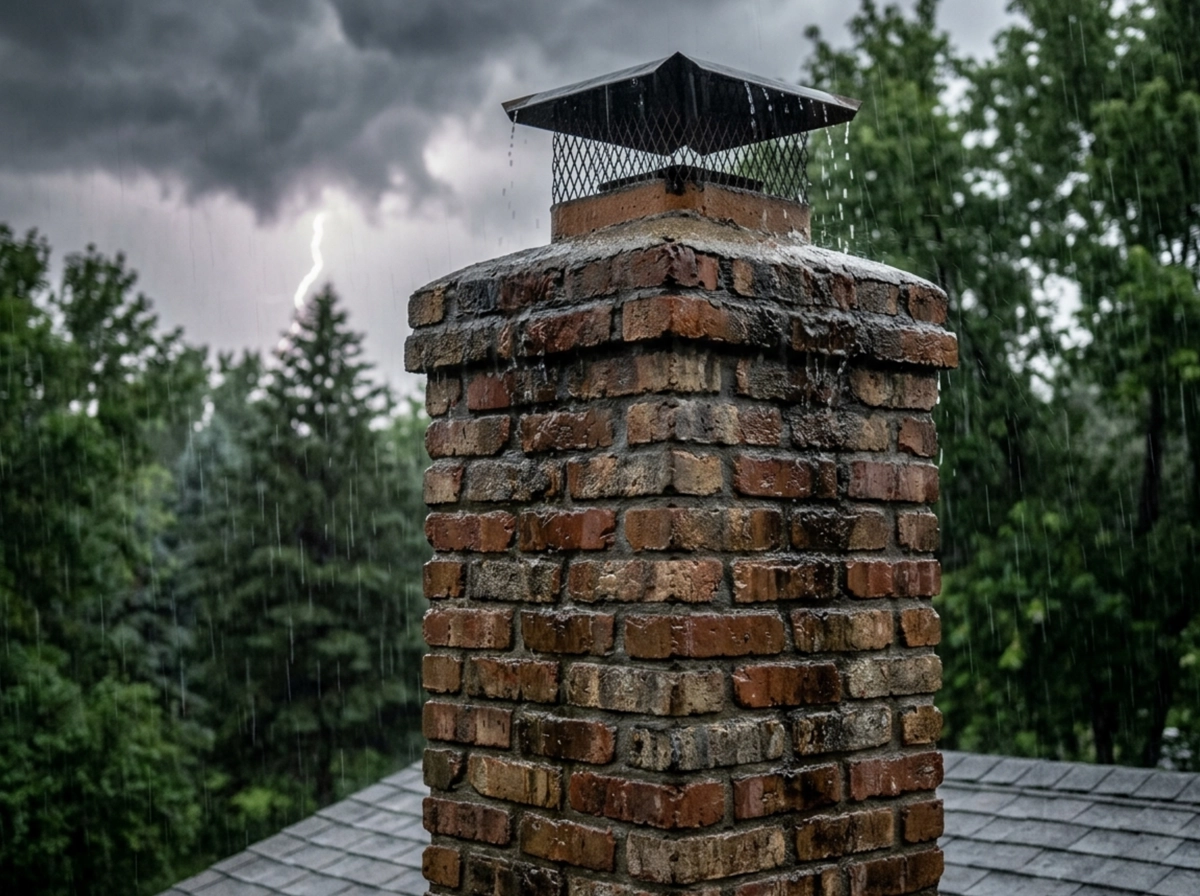
June in Minnesota can change quickly—one minute it is warm and still, and the next a thunderstorm is dropping heavy rain, wind, and hail across your neighborhood. After severe weather, your masonry chimney is one of the first areas worth checking because it sits high above the roofline and takes the full force of the storm. If you are looking for chimney repair in Minneapolis–St. Paul, we want you to know what damage to look for before a small exterior problem becomes a costly interior water leak.
Why Summer Storms Are Hard on Masonry Chimneys
Heavy rain can drive water into small cracks. Hail can chip the chimney crown, dent chimney caps, or loosen mortar. Strong wind can shift metal flashing or expose gaps where the chimney meets the roof. Once water gets behind brick, under flashing, or into the attic, damage can spread quickly to ceilings, walls, insulation, and framing.
That is why we encourage homeowners to check their chimneys after June storms, especially if hail, high winds, or wind-driven rain moved through your area.
Start With a Safe Ground-Level Check
You do not need to climb on your roof. In fact, please do not. From the ground, use binoculars or your phone camera zoom to look for changes. Check for loose or missing bricks, cracked mortar joints, leaning sections, staining, missing chimney cap parts, or pieces of masonry on the roof or ground.
Inside your home, look for brown ceiling stains, damp drywall near the chimney chase, musty odors, peeling paint, or water marks in the attic. These are warning signs that storm damage may be allowing water inside.
What to Look for on the Crown, Cap, and Flashing
The chimney crown is the concrete or masonry top that sheds water away from the flue. After hail or freeze-thaw stress, it can crack and let water run directly into the chimney structure.
The chimney cap protects the flue opening from rain, animals, and debris. Look for a cap that appears bent, missing, loose, or tilted.
Flashing is the metal seal where the chimney passes through the roof. If flashing is lifted, rusted, separated, or surrounded by damaged shingles, water can enter where it is hardest to see until interior damage appears.
When to Call 2nd Generation Chimneys, Inc.
If you notice cracking, loose brick, missing mortar, staining, damaged caps, suspect flashing, or any sign of water indoors, it is time to schedule a full chimney inspection. We can identify storm damage, explain repair options, and help you address the problem before it spreads.
We also know chimney repairs can arrive at the worst time. That is why financing availability is an important part of our repair strategy. Instead of delaying necessary masonry chimney repair and risking larger water problems, you can ask us about financing options that help make timely repairs more manageable.
A small crack after a June storm can become a bigger repair if water keeps entering the system.
2nd Generation Chimneys, Inc. serves Minneapolis, St. Paul, and the surrounding communities.
